

Bringing cleaning, security, maintenance and customer experience together under one provider can simplify service delivery. But simply putting multiple services under the same contract doesn’t necessarily make them integrated.
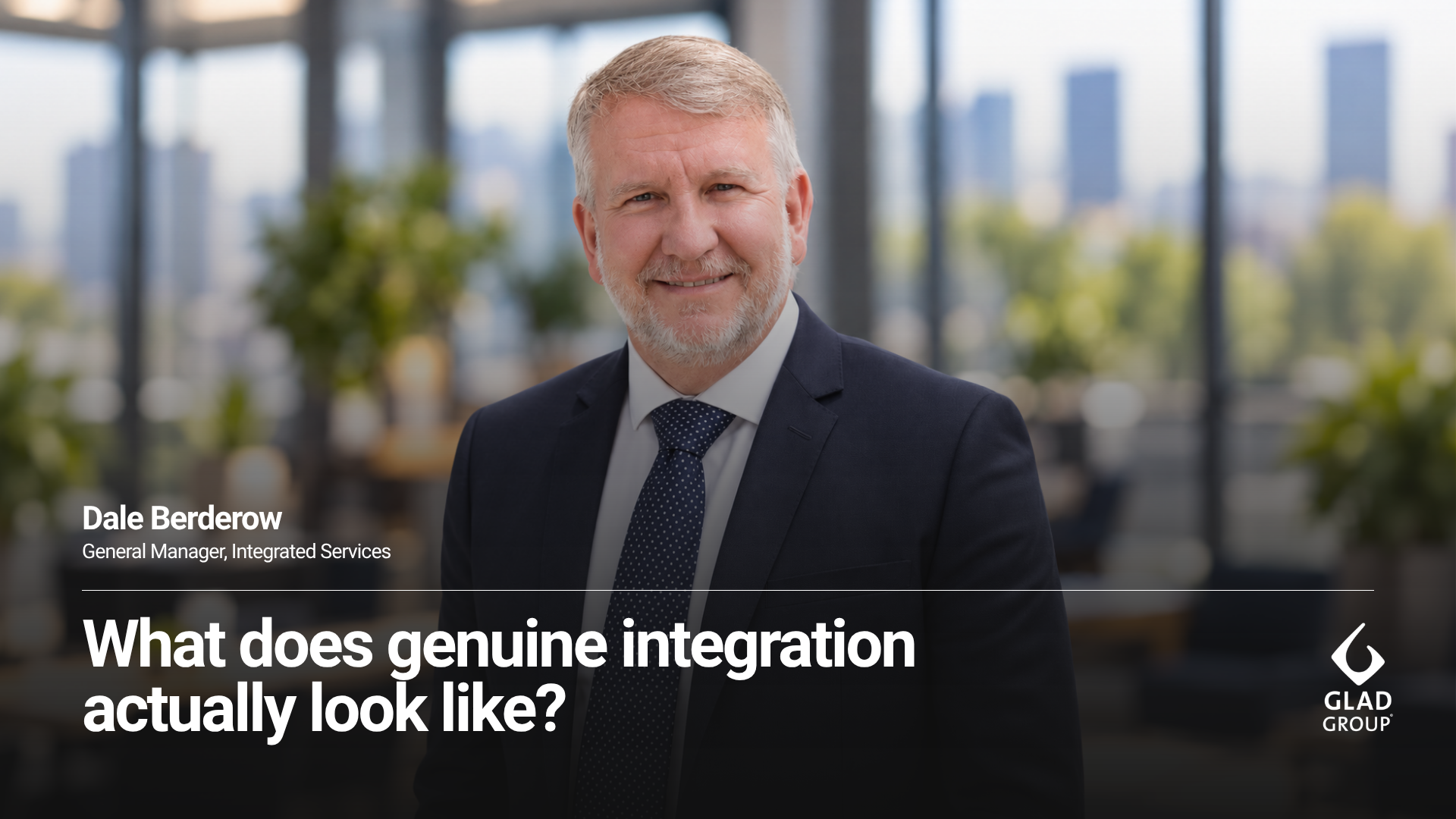
For Dale Berderow, General Manager, Integrated Services at Glad Group, the difference comes down to how those services work together in practice.
“One partner for cleaning, security, maintenance and customer experience – genuinely integrated, not just bundled.”
We spoke with Dale about what genuine integration looks like, how client expectations are changing and where he sees the biggest opportunities for Glad Group’s integrated model.
The difference between multi-service and integrated service
One of the biggest misconceptions about integrated services is that bringing several service lines together automatically creates an integrated model.
A client might have one provider, one contract and one account manager, while cleaning, security, maintenance and customer experience continue to operate as separate teams – each with their own schedules, reporting and escalation processes.
For Dale, that’s multi-service rather than true integration.
Genuine integration means creating connections between those services – sharing information, understanding what is happening across the site and taking collective responsibility for outcomes.
A maintenance issue spotted by a security officer, for example, shouldn’t disappear into a gap between departments. Someone takes ownership of making sure it reaches the right team and is resolved.
The client shouldn’t have to manage the gaps between services. A genuinely integrated model moves that complexity to the provider.
One team, with shared accountability
At Glad Group, the Integrated Services Manager plays an important role in bringing that model together onsite.
Rather than requiring the client to coordinate different service teams, the Integrated Services Manager provides a central point of contact across the contract.
Behind that sits a broader principle – creating one team culture rather than a collection of separate service lines operating alongside each other.
Cleaning, security, maintenance and customer experience remain specialist disciplines, but they work towards the same site outcomes, with shared standards and greater visibility across what is happening.
That connection can help reduce friction between services, support faster resolution of issues and create a simpler experience for the client.
What are clients asking for now?
According to Dale, the conversation is increasingly moving beyond whether an individual service has completed its contracted tasks.
Clients want visibility across their operations. They want service teams to communicate with each other. They expect providers to respond as their environments and priorities change.
Data and technology are playing a growing role in that shift, helping teams use information about what is happening onsite to inform how and where resources are deployed.
Sustainability is another growing consideration, with clients looking for clearer information around areas such as waste, energy and emissions.
But Dale believes people remain just as important.
Workforce stability, communication, training and the ability for people across different service streams to identify and escalate issues all contribute to a more connected site.
Turning service data into better decisions
For Glad Group, Dale sees one of the biggest opportunities in connecting the information already being generated across different services.
Through GladConnect, Glad Group can provide clients with greater visibility of service delivery and performance.
The next step is increasingly about looking at that information collectively.
Cleaning, security and maintenance data is often viewed in separate streams. Connecting those insights can create a clearer picture of how a site is operating and help teams identify relationships that may otherwise be missed.
That could mean using site activity to help inform cleaning schedules, understanding how security activity intersects with broader operational patterns or identifying maintenance trends earlier.
The objective isn’t simply to collect more data.
It’s to use that information to make better operational decisions.
Integration should make things simpler
Ultimately, the value of an integrated model isn’t simply having more services with the same provider.
It is what happens between those services.
When teams communicate, information is connected and accountability is clear, the client has fewer gaps to manage and a stronger view of what is happening across their environment.
For Dale, that is where genuine integration starts – not with a bundled contract, but with a team that operates as one.
Discover what an integrated approach could look like for your organisation.
Talk to Glad Group today.
Add a Comment